
राजनीति घर से ही शुरू हो जाती है…दो बच्चों को एक खिलौने के लिए ही राजी करना घर की राजनीति है…वैसे राजनीति को कोई समझ नहीं पाया…अमीर, गरीब, शरीफ और बाहुबली…हर तरह का व्यक्ति राजनीति में है…राजनीति घर से शुरू होकर देश के सवोच्च पद तक पहुंच चुकी है…हर कोई नायक फिल्म का हीरो बनना चाहता है…अनिल कपूर की तरह…जो एक दिन का सी.एम. होता है…कई लोगों के फायदे के लिए राजनीति करता है तो कई खुद अपने फायदे के लिए…अपने राजनीतिक प्रभाव के चलते पहले भी सियासी नेता टैक्स के लिए परेशान करते थे…
ऐसा ही फाजिल्का में भी होता रहा है…जिसमें वो परिवार भी पिसते रहे, जिनकी उस समय दूर दूर तक धूम थी…वो परिवर थे बोदला परगना के…जिनका इलाके में 48 गांवों पर कब्जा था…जिनमें से अधिकांश परगना बहक के आसपास थे जो कि सतलुज दरिया के किनारे पर था…इसके अलावा उनके पास 20 गांव मिन्टगुमरी, 14 गांव फिरोजपुर, 6 गांव बहावलपुर, 4 गांव बीकानेर और 4 गांव लाहौर में थे…घग्गर और डब्बवाली तहसील में भी इनके कुछ गांव थे…फाजिल्का इलाके में उनका ठिकाना गांव अरनीवाला शेख सुुभाण, वल्लेशाहके, नूरशाहके, टाहलीवाला बोदला, आहल बोदला, बहक बोदला और बहक खास आदि गांवों में था।
दरअसल इन्हें नवाब ममदोट टैक्स के लिए काफी परेशान करता था …क्योंकि नवाब ममदोट की सियासी तौर पर स्थिति काफी मजबूत थी और जमीन जायदाद का एक बड़ा हिस्सा उनके पास था…वह दरिया के आसपास बसे लोगों से कर (टैक्स) वसूलता था…मगर कुछ देर तक कर देने के बाद बोदला कबीला ने कर देना बंद कर दिया…जिस कारण बोदला कबीला का नवाब ममदोट से झगड़ा शुरू हो गया…धीरे–धीरे बोदला आर्थिक तौर पर मजबूत हो गए और नवाब ममदोट का मुकाबला करने की स्थिति में आ गया…वर्षों तक संघर्ष के बाद यह इलाका ममदोट के अधिकार से छीन लिया गया। नवाब ममदोट के कब्जे से मुक्त हुआ बहक परगने को 1858 मे फिरोजपुर से काटकर जिला सिरसा से जोड़ दिया गया…यह ब्रिटिश सम्राज्य के बंदोबस्त अफसर ब्रेंडब्रैथ ने सन् 1857-58 में निर्धारित किया था…इसके बाद मिस्टर ब्रेंडब्रैथ का तबादला हो गया।
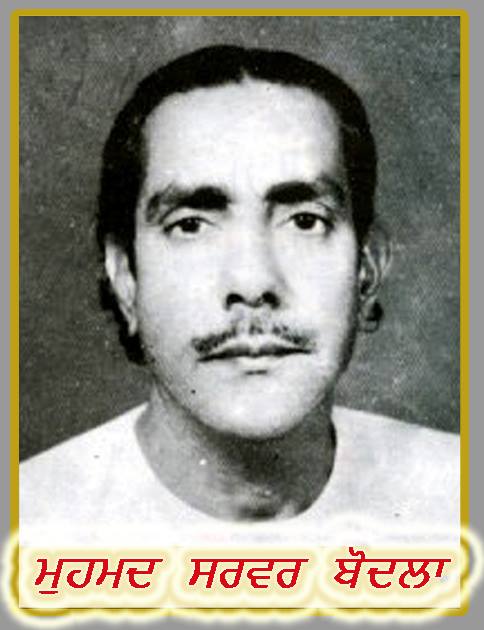
10 दिसंबर 1885 को जब फाजिल्का तहसील को जिला सिरसा से काटकर जिला फिरोजपुर से जोड़ा गया तो यह परगना भी जिला फिरोजपुर से जुड़ गया…इसके बाद तो परगना बहक फाजिल्का में काफी मजबूत होता गया और क्षेत्र के निकट के कई इलाकों में फैल गया…नवाब ममदोट का मुखी इफ्तिखार हुसैन खान था…जिस फिरोजपुर हलका मुहम्मदन में काफी सियासी रूसूख था…हालांकि बोदला सियासत में कोई रूचि नहीं रखते थे, लेकिन नवाब की सियासत से परेशान होकर फाजिल्का के गांव बहक बोदला के जमींदार मुहम्मद सरवर बोदला सियासत में कूद पड़े…चुनाव मार्च 21, 1946 को होने थे… फिरोजपुर जनरल मुहम्मदन रूरल सीट पर all India Muslim league की तरफ से इफ्तिखार हुसैन खान उम्मीदवा थे तो unenest party की तरफ से मुहम्मद सरवर बोदला…इलके में बोदला का प्रभाव कम नहीं था…जीत की पूरी उम्मीद थी, लेकिन जब मुहम्मद अली जिनाह ने फिरोजपुर में नवाब के पक्ष में विशाल रैली की तो वोटरों का रूझान बदल गया और बोदला चुनाव हार गए…इसके बावजूद मुहम्मद सरवर बोदला ने लोगों से प्यार से प्यार कायम रखा…लोगों के हकों की लड़ाई लड़ते रहे…मगर देश के विभाजन के बाद उन्हें यह इलाका छोडऩा पड़ा और वह पाकिस्तान चले गए…जहां 1952 में वह विधायक चुने गए।
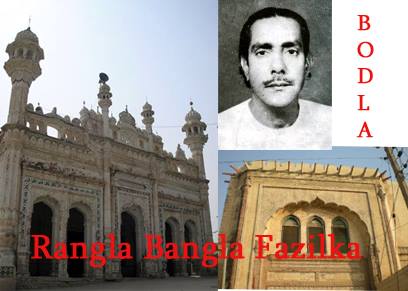
THE BODLAS.
The Bodlas claim descent from Aba Bakr Sadik Khalifa, and call themselves Shaikh Sadiki. According to their tradition, their ancestor, Shaikh Shahab-ud-din, known as Shahab-ul-mulk, came from Arabia to India three or four centuries ago, and became a disciple of Khwaja Muhammad Irak Ajami at Multan. One day that saint told Shahab-ul-mulk that he was to him Bo-e-dil (heart’s fragrance),explained to mean that he knew intuitively his preceptor’severy thought; hence the descendants of Shahab-ul-mulk are known as “Bodlas.” Shahah-ul-mulk afterwards settled at Khai near the Satlaj, in Bhawalpur territory, some 70 miles south-west of Fazilka. All Bodlas derive their descent from Shahab-ul-mulk and their origin from Khai. Two small families of Bodlas seem to have come directly from Khai to this district within the last 60 years. One of these holds Ranga on the Ghaggar, in the Dabwali tahsil, and the other owns Sarawan and four other villages in the Fazilka Rohi. But the chief immigration of Bodlas is said to have taken place some four generations ago under Muhkamdin, who came from Khai through Sangraur in Faridkot and settled at Ahal, where the remains of his town are still to be seen, not far from Bahak. The country was then uninhabited, and the Bodlas kept large herds of cattle and drove them hither and thither for. pasture over the tract of country afterwards known as Pargana Bahak, from Bahak, their chief village after the destruction of Ahal. The Bodlas had many contests with the Nawab of Mamdot, who claimed jurisdiction over their country, and it was not till about 1855 A.D. that they were removed from his control and the pargana was attached to the Firozpur District and settled. It was transferred to the Sirsa District in 1858. The greater part of Pargana Bahak was declared to belong to the Bodias in proprietary right, and one-sixteenth of the revenue of the whole pargana was conferred on them in jagir, as it seemed that, on account of their saintly character, they had been allowed this grant by the native rulers.Those Bodlas who belong to this pargana still enjoy the allowance, which is divided into complicated shares, founded chiefly on ancestral descent. When the country to the south and east was being settled 35 years ago, some of the Bahak Bodlas acquired villages or shares in villages outside the pargana, and a few of them obtained further grants for good service in the mutiny.
Their claim to a saintly character and to some sort of precedence has always been allowed by their neighbours, and has, by fostering a spirit of exclusiveness, probably had some effect upon their tribal custom. They are supposed to be able to curse with efficacy, and instances are given in which the evils called down by them on their enemies were fulfilled; but their special gift is the cure of the bite of mad dogs or jackals, which is performed by a species ofincantation; and large numbers of all classes, Hindu as well as Musalman, apply to them in cases of bite, and are said to be cured by their miraculous power. They were until about 25 years ago essentially a pastoral tribe, and even now a large part of their wealth consists in horses and cattle. They do not cultivate much themselves and are bad managers, unthrifty, and extravagant, and the proprietary rights conferred on them at the settlement in 1858 are fast passing out of their hands into those of Sikh Jats. Their tenants are almost all Musalmans, paying rent in kind, and to an unusual extent under the power of their landlords. The Bodlas are generally large, stout men, with broad flabby faces, large, broad, prominent noses, and thick but not projecting lips, which give their wide mouths a weak appearance. Their language and customs are those of the Wattus and other Panjabi Musalmans among whom they live and with whom they are closely connected by marriage. They have no connection with other Shaikhs, and, notwithstanding their proud traditions, are probably, as surmised by Mr. Oliver, really of Wattu descent, or at all events of indigenous origin, and distinguished from their neighbours only by the assumption of superior sanctity and the spirit of exclusiveness it has bred. In this district they own, in whole or in part, 42 villages, most of which are in or near Pargana Bahak, and not far from the Satlaj. They are said to hold, besides, some twenty villages in Montgomery, fourteen in Firozpur, six in Bhawalpur, four in Bikaner, and four in Lahore; but these figures are probably exaggerated. They are a small but comparatively important clan, found, it seems, only in the neighbourhood of the Satlaj. They own to no leader, either political or religious, among living men
 Differentview.wordpress.com